
Helpful Information
-
The Pre-Sentence Impact Statement is a presentation of the affect the murder of a loved one has caused. Having the presentation by a family member or friend personalizes the murder victim and is information that cannot be obtained from other sources. Only the family or friend of the murder victim directly affected can truly describe the loss, frustration and fear the crime has created.
The Pre-Sentence Impact Statement, as told by the family or friend of a murder victim, provides the judge and jury with a perspective no one else can.
In California, courts do not accept Victim Impact Statements (VIS) (normally made known to the judge and jury before trial begins in some states). The reason for California NOT accepting VIS’s is that they are often viewed as prejudicial and could be grounds for an appeal.
Pre-Sentence Impact statements by family and friends of murder victims are accepted and made part of the pre-sentence investigation report submitted to the presiding judge for consideration at time of sentencing.
-
Pre-sentence Impact Statement (Written or Verbal)
Introduce/describe in your own words who the murder victim was – (mother, father, brother, sister, wife, husband, son, daughter, etc.)
What are the consequences of the loss of the murder victim.
To whom:
Specific family member – son(s), daughter(s), wife, husband, etc.
Financial loss:
Family support (husband, father, wife, mother)
Funeral expenses
Companionship:
To spouse, children, parents, etc.
Recommendation for sentencing.
Family recommendation:
25-life, life without possibility of parole, or death
include enhancements (Note: It is important to familiarize yourself with sanctions of crime, enhancements, etc.)
Sample Pre-Sentence Impact Statement
This sample Pre-Sentence Impact Statement is just that, a “sample”. Relationship and circumstances may differ.
At no time does this sample Pre-Sentence Impact Statement use the defendant’s name. This is intentional. NEVER personalize the defendant. ALWAYS personalize the victims(s), i.e. use of names.
You know the value from speaking from the heart. Use language that best expresses your true feelings. There is no substitute for providing a perspective of the murder victim in one’s own words.
Introduce yourself
My name is ……………
Your relationship to murder victims(s)
On (date), (name of victim(s), was murdered by the defendant(s). How do I know this? You, the Jury, returned a verdict of guilty. The facts of the case were proven beyond a reasonable doubt and your verdict was rendered guilty!
Words cannot express the pain and anguish our family and friends have endured since their murder(s). The defendant(s) decision to take the life of a human being with no regard for the effect(s) it may have on others is unimaginable.
The loss of (a daughter/son/mother/father/life-long companion/friend, etc.) is beyond words. There will be no more birthday parties, backyard gatherings, holiday celebrations or other family activities to share. The laughter, hugs, guidance/advice, sense of security and those opportunities to say, “I love you” are forever gone. Our family is forever “broken”.
To say the least, the financial affect on the family has also been devastating.
Compassion is a word commonly used for and by defendants. However, I ask, how much compassion the defendant(s) considered when the decision was made to murder (name of victim)?
It is the request of the family that the maximum penalty for the crime for which the defendant(s) was convicted be imposed. On behalf of the family of (victim), I wish to express my sincerest gratitude for allowing this opportunity of expression.
-
1. National Victim Notification Network
A. This service allows crime victims to obtain timely and reliable information about criminal cases and the custody status of offenders 24 hours a day. Victims and other concerned citizens can also register to be notified by phone, e-mail, or TTY device when an offender’s custody status changes.
www.vinelink.comB. This document contains information about victim’s rights, services, criminal and juvenile justice for all 50 states.
www.vinelink.com/docs/VictimResources.pdfC. All states may give victims the right to be notified of any or all of the following:
Escape
Recapture
Earliest possible release date
Transfer to another prison
Change in security status
Transfer to a mental institution
Death of the offender in prison
Post-conviction DNA testing
Parole application
Parole hearing
Parole release
Release upon completion of sentence
Pardon/clemency application
Pardon/clemency hearing
Pardon/clemency release
www.vinelink.com/docs/WhentheOffenderisBehindBars.pdf
2. California Department of Corrections and Rehabilitation
A. Office of Victim and Survivor Rights and Services – Lifer parole process, request for adult offender information, etc.
http://www.cdcr.ca.gov/Victim_Services/index.htmlB. Parole Hearing Schedule – For lifers by month.
http://www.cdcr.ca.gov/Divisions_Boards/BOPH/hearing_schedule.htmlC. Victims Can Request a Copy of Parole Hearing Transcripts.
www.cdcr.ca.gov/Divisions_Boards/BOPH/psh_transcript.htmlD. Request For Victim Services and Restitution Collection – CDCR form 1707. Includes notification of release request, request for special conditions of parole, request for restitution collection.
www.cdcr.ca.gov/Victim_Services/docs/victim_form.pdfE. How Do I Request Compensation for Travel Costs to a Parole Hearing? As of May 2010, OVSRS has funds available through a federal grant, which allows for reimbursement – up to $100 – to a limited number of victims for costs associated with travel to parole hearings. For information on how to apply for travel reimbursement, please contact OVSRS at (877) 256-6877.
3. California Office of Attorney General – Victim Services
Includes FAQ’s, resources, victim notification, victim rights including those regarding parole hearings.
http://ag.ca.gov/victimservices/resources.phpA Victim’s Guide to the California Parole Hearing Process – by the Crime Victims Assistance Network Foundation
Table of Contents
What is a parole hearing?
Where is the parole hearing held?
When is the parole hearing held?
Who goes to the parole hearing?
What happens if I want to attend the parole hearing?
What if I don’t want to attend the hearing?
How do I prepare for the parole hearing?
The decision if the inmate is denied or granted parole.
A guide to preparing your impact statement.
Resources.
-
1. California Department of Corrections and Rehabilitation
Request for Victim Services and Restitution Collection – CDCR form 1707. Includes notification of release request, request for special conditions of parole, request for restitution collection.
www.cdcr.ca.gov/Victim_Services/docs/victim_form.pdf2. California Victim Compensation and Government Claims Board
This resource can help pay bills and expenses to those injured or threatened with physical injury in a violent crime, such as:Medical and dental treatment
Mental health services
Income loss
Funeral and burial expenses
Loss of support, for dependents when a victim is killed or disabled because of a crime
Job retraining
Home and vehicle modifications
Home security
Relocation
Insurance co-payments
Crime scene cleanup
Medically necessary equipment such as a wheelchair
Childcare services, when a caregiver is killed or disabled because of a crime
The fund receives 100% of its revenue from restitution fines, diversion fees, restitution orders, and penalties paid by offenders convicted of crimes.
www.vcgcb.ca.gov/Video overview of services provided:
http://www.vcgcb.ca.gov/resources/video.aspx3. Were You the Victim of a Crime and the California Court Ordered You Restitution?
The California Department of Corrections and Rehabilitation may have collected money for you. Contact the Office of Victim and Survivor Rights and Services to inquire if you have unclaimed money from a direct order of restitution. To update your address or to obtain additional information, call us toll free at 1-877-256-6877.Spanish: Si usted fue victima de un crimen y la corte le otorgo restitucion, es posible que el Departamento de Correcciones y Rehabilitacion haya recibido dinero a su favor. Llame a la oficina de Victimas y Sobrevivientes para preguntar si usted tiene restitucion que no se haya reclamado. Para obtener mas informacion, llame gratis al 1-877-256-6877.
-
The Disaster Center – Provides US crime statistics for the whole country, by state, and by community from 1960-2006.
http://www.disastercenter.com/crime/ -
“No Room For Doubt” by Angela Dove – A compelling account of a ‘real-life’ homicide and its aftermath. Angela Dove writes about her step-mother’s brutal murder, meticulously recreating the course of the investigation and its chilling effect on those whose lives were tainted by this crime.
The heroine in this case is Jacque MacDonald, Debi Whitlock’s mother, who vowed to find her daughter’s killer. MacDonald parlayed her grief and despair over her daughter’s death into a television show, “The Victims’ Voice”, to help other California crime victim’s families cope with the pain she knew all too well. For nearly two decades MacDonald immersed herself in the overlapping worlds of crime, violence, death and grief, determined to do some good in the name of her daughter. Her efforts won her a National Crime Victims Award from the US Dept. of Justice in 2007, and in May 2009, the California Governor’s Advocacy Award.
www.noroomfordoubt.com
www.angeladove.com“The Forgiveness Myth” by Gary Egeberg and Wayne Raiter – How to heal your hurts, move on and be happy again. When you can’t or won’t forgive.
“Forgiving is the one and only way to heal your hurts.” Most of us have learned this “fact”, this “unquestioned truth,” from our earliest years on, perhaps from our families, through our experiences in a particular religious tradition, or by what we have read or heard from spiritual teachers and psychological experts. Yet in this book, by suggestion that forgiveness is a myth, we are challenging that which has been considered true for centuries.
www.theforgivenessmyth.com
garyegeberg@msn.com
(952)836-6504Citizen Jane
Con Man Killer
In 1983, Jane Alexander was a sixty-one-year-old widow and mother of six children who lived in Marin County, California, with her romantic partner, Tom O’Donnell.
A family friend for twenty-five years, Tom had captivated Jane with his carefree lifestyle and charming personality. He helped her through her grief after her husband’s death and promised her a happy future.But on October 23, Jane’s aunt, Gertrude McCabe, was found brutally murdered in her San Jose home. And the killer – Tom O’Donnell – fled with over $10,000 of Jane’s cash. Soon she discovered he had bilked her out of more than $200,000 of equity in her home, which she was about to lose.
With little forensic evidence to support an arrest, Jane Alexander
worked diligently to bring her aunt’s murderer to justice. For thirteen years she fought through the bureaucratic red tape of the criminal justice system even as she struggled with bankruptcy. She would not stop until her former lover was behind bars…..“Citizen Jane” is her story.
Update: Tom O’Donnell was denied parole at his 2007 parole hearing and died in prison in January 2010.
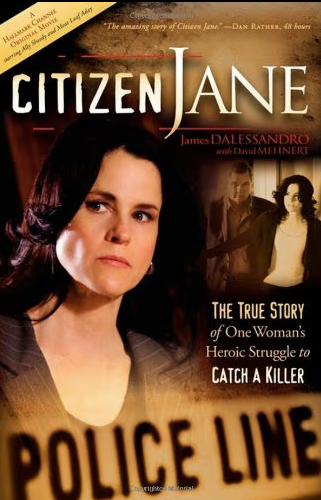
Con Man Killer
In 1983, Jane Alexander was a sixty-one-year-old widow and mother of six children who lived in Marin County, California, with her romantic partner, Tom O’Donnell.
A family friend for twenty-five years, Tom had captivated Jane with his carefree lifestyle and charming personality. He helped her through her grief after her husband’s death and promised her a happy future.
But on October 23, Jane’s aunt, Gertrude McCabe, was found brutally murdered in her San Jose home. And the killer – Tom O’Donnell – fled with over $10,000 of Jane’s cash. Soon she discovered he had bilked her out of more than $200,000 of equity in her home, which she was about to lose.
With little forensic evidence to support an arrest, Jane Alexander
worked diligently to bring her aunt’s murderer to justice. For thirteen years she fought through the bureaucratic red tape of the criminal justice system even as she struggled with bankruptcy. She would not stop until her former lover was behind bars…..
“Citizen Jane” is her story.