
InformEmpowerVictim Awareness and Education
Victims Deserve Truth in Sentencing
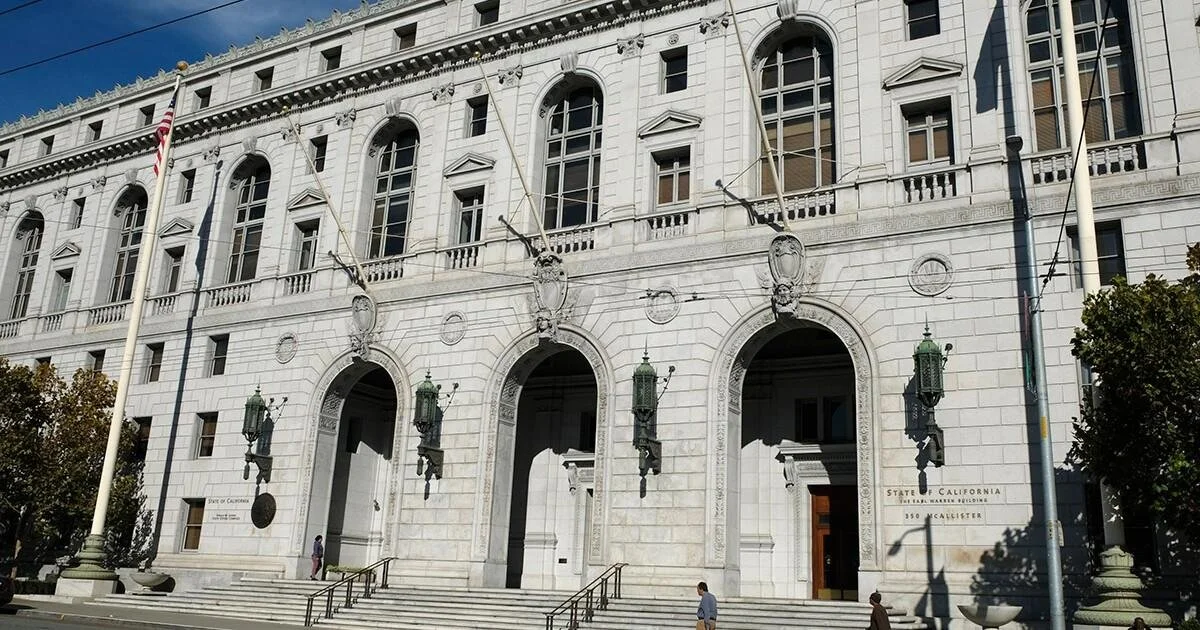
At Citizens Against Homicide (CAH), we believe victims and their families deserve truth in sentencing, accountability, and elected officials who respect the justice system that delivered their verdicts. Governor Gavin Newsom’s decision to commute the death sentences of all 548 individuals on California’s death row to life without the possibility of parole raises serious concerns about the integrity and finality of the sentencing process. By taking this action, the Governor has effectively overridden the decisions of juries, courts, and California voters, who have repeatedly rejected efforts to abolish the death penalty.
These sentences were not handed down arbitrarily; they were the result of a judicial process intended to hold individuals accountable for the most heinous crimes. For families who have endured the unimaginable loss of a loved one, knowing that the perpetrator will serve the sentence imposed at trial may be the closest thing to closure they will ever receive. Changing that sentence after the fact disregards not only the outcome of the trial but also the lasting impact on those left behind. We believe justice must mean more than a verdict - it must mean honoring the sentences delivered, respecting the will of the people, and ensuring that victims and their families are not forgotten once the courtroom doors close. Victims deserve truth in sentencing.
Call to Action
How Can I Support?
We encourage our community, victims' families, and concerned Californians to make their voices heard.
WE URGE THE CALIFORNIA SUPREME COURT TO:
UPHOLD THE INTEGRITY OF THE JUDICIAL PROCESS and carefully consider the implications of blanket commutations.
RECOGNIZE THE INDIVIDUAL CIRCUMSTANCES OF EACH CASE, including the severity of the crimes and the sentences imposed by juries.
RESPECT THE VICTIMS AND THEIR FAMILIES whose lives have been permanently changed and whose voices deserve consideration in decisions affecting their pursuit of justice.
HONOR THE WILL OF CALIFORNIA VOTERS who have repeatedly voted to retain the death penalty.
PROTECT THE PRINCIPLE OF TRUTH IN SENTENCING so that the sentences imposed through the criminal justice system are not treated as meaningless or disposable.
Justice does not end when a verdict is delivered. For victims' families, the consequences of these crimes last a lifetime. The sentences handed down in court matter, and the families who have waited for justice deserve to have those sentences respected.
TAKE ACTION. MAKE YOUR VOICE HEARD.
CAH has prepared a letter template that you can use to express your concerns directly to the California Supreme Court. We encourage you to personalize the letter, share your perspective, and join us in advocating for truth in sentencing.
VICTIMS DESERVE TRUTH IN SENTENCING.
Make Your Voice Heard
Your voice matters. Use our letter template to contact the California Supreme Court and express your concerns about the commutation of California's death row sentences. You can access both an emailable and printable version of the letter using the buttons above. For your convenience, the full letter is also provided below for you to read.
[Your Name]
[City, California]
[Date]
SUBJECT: Oppose Blanket Death Sentence Commutations — Demand Individualized Review
The Honorable Chief Justice Patricia Guerrero and Associate Justices
Supreme Court of California
350 McAllister Street
San Francisco, CA 94102
Dear Chief Justice Guerrero and Associate Justices:
I am writing to urge the California Supreme Court to reject any blanket approval of Governor Gavin Newsom’s proposed commutations of hundreds of death sentences.
These cases are not simply names on a list. Each represents a life taken, families forever devastated, and decisions reached by juries and judges after consideration of the evidence and circumstances of individual crimes. Many of these individuals have extensive criminal histories and multiple felony convictions. Their cases deserve more than a blanket decision.
The Court has an independent constitutional responsibility and must not become a rubber stamp for an executive policy initiative. I urge the Justices to demand individualized consideration of every case, including the nature of the crimes, criminal histories, and the voices of the victims and surviving families.
Victims’ families should not be reduced to an afterthought in decisions that fundamentally affect the justice they have spent years seeking. Their loved ones’ lives matter, their suffering matters, and their voices deserve to be heard.
California voters have repeatedly upheld the death penalty. That expressed will should not be casually disregarded, nor should the individual decisions of juries and judges be swept aside through a blanket policy.
There is a profound difference between individual acts of mercy and wholesale commutations driven by political policy. Justice is not one-size-fits-all. Neither is mercy.
I respectfully ask the Court to reject blanket approval and insist upon individualized review, accountability, and meaningful consideration of the victims and families affected by these decisions.
Respectfully,
[Your Name]

Myth Versus Fact
-
FACT: Although life without the possibility of parole (LWOP) generally means an individual is not eligible for parole, California's history demonstrates that this sentence is not always permanent.
According to a 2023 Human Rights Watch report, approximately 143 individuals in California who were originally sentenced to life without parole had secured release through gubernatorial commutations or changes in state law. A subsequent California Supreme Court opinion referenced approximately 200 individuals originally sentenced to LWOP who had secured release over a ten-year period.
These releases were made possible through mechanisms that changed the original sentences or created new parole eligibility. For example, California law allows certain individuals who received LWOP sentences for crimes committed before age 18 to become eligible for youth offender parole hearings after serving 25 years.
This history demonstrates why victims' families have legitimate concerns about the long-term finality of sentencing decisions. A sentence that is intended to keep an individual incarcerated for life can be changed through future executive or legislative action.
For families who have already endured the loss of a loved one, the possibility of future changes to a sentence can mean continued uncertainty and the fear of having to revisit the justice process. Victims deserve truth in sentencing. The punishment determined through the judicial process should carry meaning, and families deserve confidence that the sentences imposed will be respected.
-
FACT: Not all 548 proposed commutations are subject to California Supreme Court review. According to the Governor's November 5, 2026, filing, 382 individuals have multiple felony convictions and require a recommendation from at least four California Supreme Court justices before their sentences can be commuted.
The remaining 166 individuals do not require this recommendation, meaning the Governor can proceed with their commutations without that additional constitutional step.
While all 548 individuals are included in the proposed action, the distinction matters. The Supreme Court's role is limited to the 382 individuals requiring its recommendation.
-
FACT: Governor Newsom has asked the California Supreme Court to issue its recommendations by December 31, 2026, so he can complete the commutations before leaving office.
This request concerns 382 individuals, representing hundreds of criminal histories, underlying convictions, and families affected by the original crimes. The Court must obtain the concurrence of at least four justices for each qualifying recommendation.
The California Department of Corrections and Rehabilitation's November 5 notice to victims and survivors states that the timing of the necessary legal steps is unknown. This uncertainty is especially concerning for families who deserve meaningful consideration and an opportunity to make their voices heard.
CAH believes decisions of this magnitude should not be driven by an administrative deadline or political transition. Victims' families deserve adequate time, meaningful consideration, and an opportunity to have their perspectives heard before decisions affecting their loved ones' cases are finalized.
-
FACT: Although the proposed commutations do not overturn convictions, erase criminal records, or eliminate restitution orders, they fundamentally change the punishment imposed by the jury.
A death sentence is a distinct legal punishment. Replacing it with life imprisonment without the possibility of parole changes the outcome of the original sentencing process.
For victims' families, the distinction is significant. The sentence was determined through a trial involving evidence, testimony, and deliberation. The families who endured that process deserve to have its outcome respected.
A conviction without the sentence originally imposed is not the same outcome. Truth in sentencing means respecting the decisions reached through the judicial process and recognizing the lasting impact those decisions have on victims and their families.
-
California Habeas Corpus Resource Center – Commutation FAQs — Official explanation of the 548 individuals and the Supreme Court recommendation process.
Governor's Explanatory Statement — The Governor's legal reasoning and explanation of the proposed commutations.
Governor's Official Commutation Fact Sheet — Statistics and details about the proposed action.
CDCR Notice to Victims and Survivors — Official notice explaining the changes and what victims' families can expect.
California Today – Breakdown of the 548 Commutations — Reporting on the 382/166 distinction and the requested deadline.
Human Rights Watch – The Reintegration of People Sentenced to Life Without Parole (2023)
A Letter to Gavin Newsom from Board Member Eryn Cervantes

Governor Newsom:
Your decision to commute every death sentence in California—548 of them—is an act of breathtaking arrogance and moral inversion. With a single stroke of the pen, you have substituted your personal preferences for the repeated will of California voters, the verdicts of juries, the judgments of courts, and the long-sought finality owed to the families of the murdered. This is not justice. It is a unilateral nullification of the law by a lame-duck governor more interested in progressive applause and a future presidential primary than in the victims he claims to remember.
California voters have spoken clearly and repeatedly. In 2012 and again in 2016 they rejected ballot measures that would have abolished the death penalty. They chose to keep the ultimate penalty on the books for the worst crimes. You acknowledge as much in your letter, then immediately discard it. The Constitution gives governors clemency power for extraordinary individual cases of injustice or mercy. It does not authorize a mass rewrite of every capital sentence because the occupant of the office finds “state-sanctioned killing” aesthetically or ideologically distasteful. You have turned a narrow constitutional safety valve into a veto of the electorate and the criminal justice system itself.
The people whose sentences you have erased are not abstract symbols. They include Richard Allen Davis, who kidnapped and murdered 12-year-old Polly Klaas; serial killers such as Randy Kraft and Charles Ng; and others convicted of the most aggravated murders imaginable—child killers, cop killers, and those whose crimes involved torture, multiple victims, or extreme cruelty. Juries, after reviewing the evidence, decided death was the appropriate punishment. You have decided otherwise because it better suits your conscience and your political brand. Marc Klaas, Polly’s father, has called this a gift of life to those who stole it from their victims and an allyship with the worst offenders. Other victims’ families have described the announcement as soul-hurting, a slap in the face, and a destruction of the finality they were promised. Many learned of it the same way the public did. That is not consultation. It is contempt. Your justification—that the system is imperfect, expensive, and cannot be applied with perfect fairness—applies to every serious criminal punishment. If imperfection is the standard, no conviction stands. Life without parole is not the sentence the juries imposed; it is the sentence you prefer. The practical reality that California has not executed anyone since 2006 does not erase the distinction. The death sentence carried moral weight, a measure of accountability, and a form of finality for survivors. You have removed it categorically, including for cases that required no further judicial review of the underlying guilt, while leaving the death penalty nominally legal so that future prosecutors may still seek it under a continuing de facto ban. This is theater, not principle.
You describe the decision as among the most difficult of your career and claim it reflects “California’s values.” The values of the people who vote, serve on juries, and live with the consequences of violent crime are not identical to the values of a progressive governor eyeing a national run. Timing the announcement in your final months, after elections, and in a form that will please a Democratic primary electorate while shifting the hard questions to the state Supreme Court for the majority of cases that require its approval, is transparent politics. You alone bear responsibility, as you say. The public should treat it as such.
The families of the victims deserved better than a press release and an open letter invoking abstract values while their loved ones’ killers receive a categorical reprieve. California’s justice system is imperfect; every human institution is. That does not license one elected official to erase hundreds of jury verdicts because he finds the lawful penalty personally objectionable. Your action does not make the state stronger, more just, or more decent. It makes a mockery of the process that produced those sentences and of the voters who refused to abolish them.